Should You Do Push-Ups Every Day? The Safe Way
Is it ok to do push-ups every day? Yes, if your sets stay easy and spread out. See the risks, every day vs every other day, realistic results and a weekly plan.
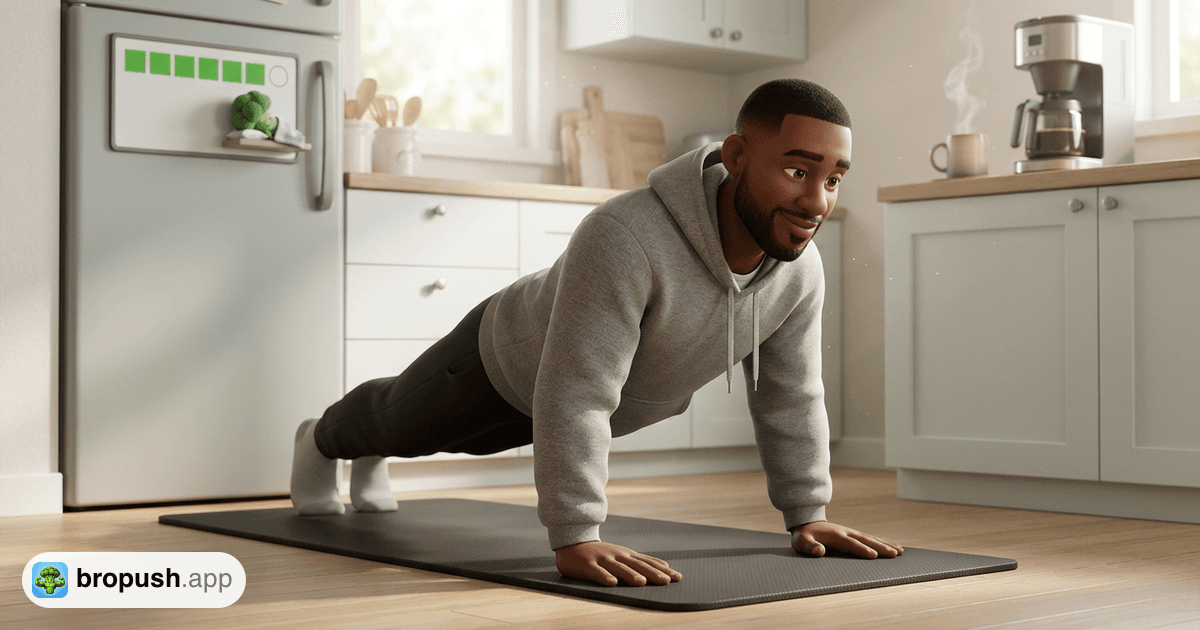
Yes, you can do push ups every day, and for many people it works well, as long as the sets are easy and spread out. Keep each set at roughly 50-70% of your max, stop before your form breaks, and take one full rest day a week. The risky version is the one most people try first: a max-effort set every single day until the elbows and shoulders start to complain.
What Happens If You Do Push-Ups Every Day
Push-ups train your chest, shoulders and triceps, with your core holding a straight line from head to heels. Done often with clean reps, they get easier: you get better at the movement and build the strength and endurance to repeat it.
This is the idea behind Grease the Groove (GTG): treat strength as a skill and practice it often, without ever getting tired. Instead of one hard session, you do several short sets across the day with plenty of rest in between. If you want the details on spacing, our guide on doing push-ups throughout the day compares that with doing everything at once.
Here is what daily push-ups can realistically do:
- Raise the number of reps you can do in one set
- Make the movement feel smoother and more controlled
- Build some upper-body strength, especially if you are new to training
- Turn exercise into a small daily habit instead of a big weekly event
What Daily Push-Ups Will Not Do
Push-ups are a strength and endurance exercise. They will not melt belly fat or reshape a specific body part. Spot reduction does not work: you cannot lose fat from one area by training the muscles underneath it. Fat loss depends mostly on your overall diet and activity, and a few sets of push-ups burn very little energy.
They also skip your back, legs and pulling muscles. That is fine for a focused block of training, but push-ups alone are not a complete program.
The Risks of Doing Push-Ups Every Day
The push-up itself is a safe exercise. Problems come from repeating it hard, every day, with no recovery.
The usual trouble spots:
- Elbows. Pain on the inside or outside of the elbow often shows up when volume jumps fast or elbows flare out wide.
- Wrists. Full weight on bent wrists, day after day, can irritate them. Push-up handles or a fist position can help some people.
- Shoulders. Flared elbows and a sagging chest at the bottom put the front of the shoulder under extra stress.
Cleveland Clinic lists overuse and repetitive movements as a common cause of tendonitis, with the elbow and shoulder among the usual sites. Its prevention advice fits daily push-ups well: start slow, build up gradually, and stop any activity if you feel pain.
The other risk is simple fatigue. If every set is a max effort, you stay sore, your reps get sloppy, and you end up practicing bad push-ups. That is the opposite of what you want. We cover this and other traps in common GTG mistakes and how to fix them.
If you already have pain or an injury in your wrists, elbows or shoulders, check with a doctor or physio before starting a daily plan.
Push-Ups Every Day or Every Other Day?
Both can work. The right choice depends on how hard each session is.
| Approach | How hard each set is | Best for | Main risk |
|---|---|---|---|
| Every day, submaximal (GTG) | 50-70% of max, never close to failure | Building reps and a daily habit | Creeping into harder sets over time |
| Every day, max effort | All-out sets to failure | Not recommended | Soreness, overuse, sloppy form |
| Every other day, harder sessions | Several sets closer to failure | Muscle growth, people with less time | Less practice of the movement |
A review by Grgic and colleagues in Sports Medicine looked at how training frequency affects strength. They found that more frequent sessions helped mainly because they added total volume; when volume was equal, frequency made no significant difference. In plain terms, daily training helps by letting you collect more good reps without any single session being hard. So if you train every day, keep it easy. If you want to push hard, take a day off in between.
How to Do Push-Ups Every Day Safely
These guidelines keep daily push-ups in the safe, submaximal zone:
- Test your max first. Do one set of strict push-ups with good form and count the reps. That number sets your working reps.
- Use 50-70% of your max per set. If your max is 20, sets of 10 to 14 are plenty. Start at the lower end for the first week or two.
- Spread the sets out. Common GTG guidance is at least 15 minutes between sets. Longer gaps work too, and an hour or more keeps every set fresh.
- Stop before form breaks. If your hips sag or your chest stops reaching the floor, end the set there.
- Take one rest day a week. It gives your joints and tendons a break and keeps the plan sustainable.
- Retest every couple of weeks. As your max goes up, update your working reps so the sets keep pace with you.
- Back off when joints ache. A sore muscle is one thing. A nagging elbow or wrist is a signal to cut reps or take a few days off.
For how many total reps to aim for, see how many push-ups a day you should do. If you want help with structure, Bropush is an iPhone app built around this approach. You test your max, it plans up to six sets a day at 60% of that max with one rest day a week, reminds you at the times you pick, and you log each set with two taps.
Push-Ups Every Day Results: What to Expect
Results vary a lot, and anyone promising a fixed number is guessing. Your starting level, sleep, consistency and how strictly you count reps all matter. Beginners usually improve fastest, since early gains come largely from getting better at the movement.
The evidence on GTG for push-ups is still thin. Mountain Tactical Institute ran an informal 3.5-week mini-study where a GTG group did eight easy sets a day, five days a week, and reported an average 35% increase in push-ups. The caveats are big: only 8 of the 25 people who started that group finished, results were self-reported, and other training was not controlled. Treat it as an encouraging early signal.
What you can reasonably expect after a few consistent weeks:
- Your working sets feel easier than they did at the start
- Your max on retest day is likely higher, though by how much varies
- The habit itself feels automatic
If you want a structured month to try this out, our 30-day Grease the Groove push-up plan lays out the weeks in detail.
A Simple Weekly Template for Daily Push-Ups
Here is a starting week for someone with a max of 20 push-ups. Adjust the reps to your own max, using about 60% as the base.
| Day | Sets | Reps per set | Notes |
|---|---|---|---|
| Monday | 5 | 12 | Space sets at least 15 minutes apart |
| Tuesday | 5 | 12 | Same as Monday |
| Wednesday | 4 | 10 | Lighter day |
| Thursday | 5 | 12 | Stop any set early if form slips |
| Friday | 6 | 12 | Add one set if you feel fresh |
| Saturday | 4 | 10 | Lighter day |
| Sunday | 0 | 0 | Full rest day |
Every two weeks, retest your max on a fresh morning and recalculate your reps. If your elbows or wrists feel worn out, run a lighter week first. For more ways to arrange sets and rest, see our Grease the Groove schedule guide.
Frequently Asked Questions
Is it ok to do push-ups every day?
Yes, for most healthy people, as long as the sets are submaximal: about 50-70% of your max, stopping before form breaks, with one rest day a week. Daily max-effort sets are what tend to cause soreness and overuse problems.
Should I do push-ups every day or every other day?
If your sets are easy and spread out, every day works well. If you prefer hard sessions close to failure, go every other day. Total volume matters more than frequency, so pick the schedule you can stick with.
What happens if you do push-ups every day for a month?
Most people find their working sets get easier and their max goes up, though the size of the gain varies a lot. A month is also long enough for push-ups to become a habit.
Can push-ups every day build muscle?
Push-ups can build muscle, especially for beginners. In a small 8-week study, Kikuchi and Nakazato found that push-ups led to chest and triceps growth and strength gains similar to a matched bench press program in untrained young men, with training twice a week. Daily submaximal sets lean more toward strength and endurance, so add harder variations over time if size is your main goal.
Do I need a rest day?
Yes. One full rest day a week lets your joints, tendons and muscles recover and makes the plan easier to keep up. If your joints ache, take an extra day off.
Related guides
- How Many Push-Ups a Day? A Plan Based on Your Max — daily rep targets for every level
- Doing Push-Ups Throughout the Day or All at Once? — how spreading sets out compares
- Grease the Groove Schedule: Sets, Reps and Rest — how to plan sets, rest and test days
- Can You Double Your Push-Ups in 30 Days? A Grease the Groove Plan — a 30-day GTG plan for push-ups
- 5 Common GTG Mistakes That Kill Your Progress (And How to Fix Them) — avoid the traps that stall progress